Physiological challenges and metabolic adaptations during human fetal development and at delivery
DOI:
https://doi.org/10.26124/bec.2026-0001Keywords:
mitochondrial function, fetal metabolism, placental physiology, hypoxia adaptation, maternal-fetal interface, developmental programmingAbstract
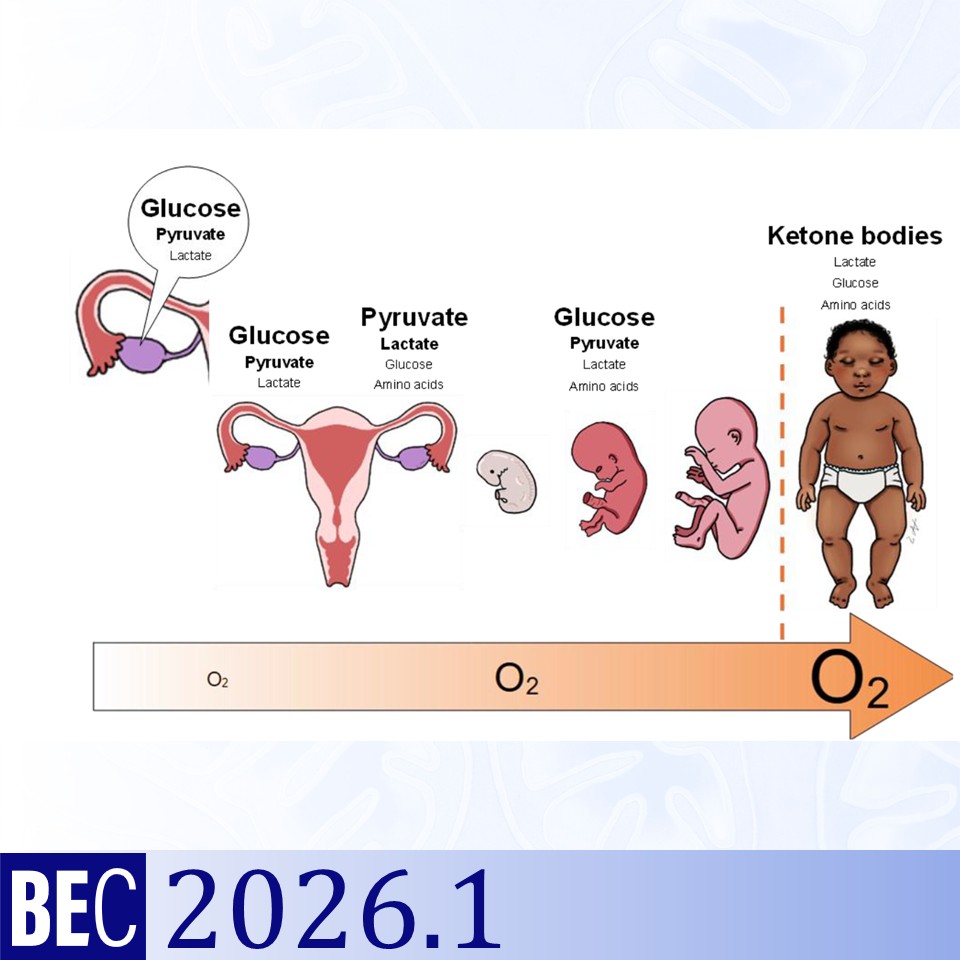
Demographic shifts, shaped by social and biological factors, highlight the need to improve pregnancy care and early childhood interventions to achieve lasting health benefits. From zygote attachment to birth, the synchronized physiological and metabolic changes in embryonic and fetal growth and maternal-fetal nutrition ensure that oxygen availability meets the energy needs of the developing fetus. Key factors include fetal hemoglobin facilitating maternal-to-fetal oxygen delivery, hormones like human chorionic gonadotropin regulating placental formation, and the hypoxia-inducible factor serving as a mechanism for fetal adaptation to low oxygen while enhancing glucose metabolism. Additionally, changes in fetal temperature, blood flow, and pH relative to the mother act as physiological mechanisms, improving oxygen delivery from the fetal bloodstream to tissues. At birth, the newborn undergoes profound respiratory, cardiovascular, and metabolic adjustments to adapt to the extra-uterine life environment. In this review, we explore the primary physiological and metabolic mechanisms enabling the human embryo and fetus to thrive and grow despite the critical constraints faced throughout its development and at the time of delivery. We discuss how metabolic changes ensure immediate survival and influence long-term health and their potential to prevent non-communicable chronic diseases. Enhancing our understanding of these critical physiological and metabolic changes during development can guide interventions for optimizing fetal growth, development, and long-term human health.
Cite
Rocha HF, Ribeiro MG (2026) Physiological challenges and metabolic adaptations during human fetal development and at delivery. Bioenerg Commun 2026.1. https://doi.org/10.26124/bec.2026-0001
References
Afshar Y, Stanculescu A, Miele L, Fazleabas AT (2007) The role of chorionic gonadotropin and Notch1 in implantation. https://doi.org/10.1007/s10815-007-9149-2
Agarwal P, Morriseau TS, Kereliuk SM, Christine A, Wicklow BA, Dolinsky VW (2018) Critical reviews in clinical laboratory sciences maternal obesity, diabetes during pregnancy and epigenetic mechanisms that influence the developmental origins of cardiometabolic disease in the offspring. https://doi.org/10.1080/10408363.2017.1422109
Aguilar J, Reyley M (2005) The uterine tubal fluid: secretion, composition and biological effects. https://www.animal-reproduction.org/article/5b5a6085f7783717068b47ed
Aherne W, Hull D (1966) Brown adipose tissue and heat production in the newborn infant. https://doi.org/10.1002/path.1700910126
Almeida A, Bolaños JP, Medina JM (1992) Ketogenesis from lactate in rat liver during the perinatal period. https://doi.org/10.1203/00006450-199204000-00022
Armistead B, Johnson E, VanderKamp R, Kula-Eversole E, Kadam L, Drewlo S, Kohan-Gradr HR (2020) Placental regulation of energy homeostasis during human pregnancy. https://doi.org/10.1210/endocr/bqaa076
Asakura H (2004) Fetal and neonatal thermoregulation. https://doi.org/10.1272/jnms.71.360
Ashorn P et al (2018) Co-causation of reduced newborn size by maternal undernutrition, infections, and inflammation. https://doi.org/10.1111/mcn.12585
Atwood CS, Vadakkadath Meethal S (2016) The spatiotemporal hormonal orchestration of human folliculogenesis, early embryogenesis and blastocyst implantation. Mol Cell Endocrinol https://doi.org/10.1016/j.mce.2016.03.039
Atyeo CG et al (2022) Maternal immune response and placental antibody transfer after COVID-19 vaccination across trimester and platforms. https://doi.org/10.1038/s41467-022-31169-8
Babayev E, Seli E (2015) Oocyte mitochondrial function and reproduction. https://doi.org/10.1097/gco.0000000000000164
Baibazarova E, Van De Beek C, Cohen-Kettenis PT, Buitelaar J, Shelton KH, Van Goozen SHM (2013) Influence of prenatal maternal stress, maternal plasma cortisol and cortisol in the amniotic fluid on birth outcomes and child temperament at 3 months. https://doi.org/10.1016/j.psyneuen.2012.09.015
Balakier H, MacLusky NJ, Casper RF (1993) Characterization of the first cell cycle in human zygotes: implications for cryopreservation. https://doi.org/10.1016/S0015-0282(16)55678-7
Ballard O, Morrow AL (2013) Human milk composition: nutrients and bioactive factors. https://doi.org/10.1016/j.pcl.2012.10.002
Baquero F (2021) Threats of antibiotic resistance: an obliged reappraisal. https://doi.org/10.1007/s10123-021-00184-y
Barbaro G, Inversetti A, Cristodoro M, Ticconi C, Scambia G, Di Simone N (2023) HLA-G and Recurrent Pregnancy Loss. https://doi.org/10.3390/ijms24032557
Barker DJ (1995) Fetal origins of coronary heart disease. https://doi.org/10.1136/bmj.311.6998.171
Barker J, Khan MAA, Solomons T (1964) Mechanism of the Pasteur effect. https://doi.org/10.1038/2011126a0
Bastawros H (2023) Fertilization. In: Human reproduction: a clinical approach. https://iastate.pressbooks.pub/humanreproduction/chapter/fertilization/
Bauman MD, Van de Water J (2020) Translational opportunities in the prenatal immune environment: Promises and limitations of the maternal immune activation model. https://doi.org/10.1016/j.nbd.2020.104864
Bell SG (1999) An introduction to hemoglobin physiology. https://doi.org/10.1891/0730-0832.18.2.9
Benita Y, Kikuchi H, Smith AD, Zhang MQ, Chung DC, Xavier RJ (2009) An integrative genomics approach identifies Hypoxia Inducible Factor-1 (HIF-1)-target genes that form the core response to hypoxia. https://doi.org/10.1093/nar/gkp425
Bertozzi S, Corradetti B, Fruscalzo A, Londero AP (2023) Editorial: Precision medicine in obstetrics: Pregnancy complication. https://doi.org/10.3390/jpm13020305
Bhutta ZA, Das JK, Rizvi A, Gaffey MF, Walker N, Horton S, Webb P, Lartey A, Black ER (2013) Evidence-based interventions for improvement of maternal and child nutrition: What can be done and at what cost? https://doi.org/10.1016/S0140-6736(13)60996-4
Bischof P, Irminger-Finger I (2005) The human cytotrophoblastic cell, a mononuclear chameleon.https://doi.org/10.1016/j.biocel.2004.05.01
Braithwaite SS (2008) Thyroid disorders. In: Critical care medicine: Principles of diagnosis and management in the adult. 3th ed. ISBN: 978-0-323-04841-5 https://doi.org/10.1016/B978-0-323-04841-5.X5001-8
Bronisz A, Ozorowski M, Hagner-Derengowska M (2018) Pregnancy ketonemia and development of the fetal central nervous system. https://doi.org/10.1155/2018/1242901
Bronson SL, Bale TL (2016) The placenta as a mediator of stress effects on neurodevelopmental reprogramming. https://doi.org/10.1038/npp.2015.231
Brooke OG (1985) Energy expenditure in the fetus and neonate: Sources of variability. https://doi.org/10.1111/j.1651-2227.1985.tb10122.x
Brooks GA (2018) The science and translation of lactate shuttle theory. https://doi.org/10.1016/j.cmet.2018.03.008
Burton GJ (2009) Oxygen, the Janus gas; its effects on human placental development and function. https://doi.org/10.1111/j.1469-7580.2008.00978.x
Burton GJ, Cindrova-Davies T, Yung HW, Jauniaux E (2021) Oxygen and development of the human placenta. https://doi.org/10.1530/rep-20-0153
Burton GJ, Jauniaux E (2010) The maternal circulation and placental shape: Villus remodelling induced through haemodynamics and oxidative and endoplasmic reticulum stress. In: Burton GJ, Barker DJP, Moffett A, Thornburg K, eds. https://doi.org/10.1017/CBO9780511933806.014
Caniggia I, Mostachfi H, Winter J, Gassmann M, Lye SJ, Kuliszewski M, Post M (2000) Hypoxia-inducible factor-1 mediates the biological effects of oxygen on human trophoblast differentiation through TGFβ3. https://doi.org/10.1172/jci8316
Castro-Rendón WA, Castro-Álvarez JF, Guzmán-Martinez C, Bueno-Sanchez JC (2006) Blastocyst-endometrium interaction: intertwining a cytokine network. https://doi.org/10.1590/s0100-879x2006001100001
Causevic M, Mohaupt M (2007) 11β-Hydroxysteroid dehydrogenase type 2 in pregnancy and preeclampsia. https://doi.org/10.1016/j.mam.2007.04.003
Cawson MJ, Anderson AB, Turnbull AC, Lampe L (1974) Cortisol, cortisone, and 11-deoxycortisol levels in human umbilical and maternal plasma in relation to the onset of labour. https://doi.org/10.1111/j.1471-0528.1974.tb00373.x
Cetin I, Corbetta C, Sereni LP, Marconi AM, Bozzetti P, Pardi G, Battaglia FC (1990) Umbilical amino acid concentrations in normal and growth-retarded fetuses sampled in utero by cordocentesis. https://doi.org/10.1016/0002-9378(90)90860-a
Chandel NS, McClintock DS, Feliciano CE, Wood TM, Melendez JA, Rodriguez AM, Schumacker PT (2000) Reactive oxygen species generated at mitochondrial complex iii stabilize hypoxia-inducible factor-1α during hypoxia. https://doi.org/10.1074/jbc.m001914200
Chen PR, Redel BK, Spate LD, Ji T, Salazar SR, Prather RS (2018) Glutamine supplementation enhances development of in vitro-produced porcine embryos and increases leucine consumption from the medium. https://doi.org/10.1093/biolre/ioy129
Chen X, Qian Y, Wu S (2015) The Warburg effect: Evolving interpretations of an established concept. https://doi.org/10.1016/j.freeradbiomed.2014.08.027
Christmas KM, Bassingthwaighte JB (1985) Equations for O2 and CO2 solubilities in saline and plasma: combining temperature and density dependences. https://doi.org/10.1152/japplphysiol.01124.2016
Coale AJ (1984) The demographic transition. https://doi.org/10.30541/v23i4pp.531-552
Collado-Fernandez E, Picton HM, Dumollard R (2021) Metabolism throughout follicle and oocyte development in mammals. https://doi.org/10.1387/ijdb.120140ec
Colson A, Sonveaux P, Debiève F, Sferruzzi-Perri AN (2021) Adaptations of the human placenta to hypoxia: opportunities for interventions in fetal growth restriction. https://doi.org/10.1093/humupd/dmaa053
Cornillie FJ, Lauweryns JM, Brosens IA (1985) Normal human endometrium: An ultrastructural survey. https://doi.org/10.1159/000298983
Costantine MM (2014) Physiologic and pharmacokinetic changes in pregnancy. https://doi.org/10.3389/fphar.2014.00065
Croxatto HB (2002) Physiology of gamete and embryo transport through the Fallopian tube. https://doi.org/10.1016/s1472-6483(10)61935-9
Cummins JM (2001) Mitochondria: potential roles in embryogenesis and nucleocytoplasmic transfer. https://doi.org/10.1093/humupd/7.2.217
d’Hauterive SP, Close R, Gridelet V, Mawet M, Nisolle M, Geenen V (2022) Human chorionic gonadotropin and early embryogenesis: Review. https://doi.org/10.3390/ijms23031380
Dame C, Juul SE (2000) The switch from fetal to adult erythropoiesis. https://doi.org/10.1016/s0095-5108(05)70036-1
Dani C, Poggi C, Pratesi S (2019) Bilirubin and oxidative stress in term and preterm infants. https://doi.org/10.1080/10715762.2018.1478089
Déry MAC, Michaud MD, Richard DE (2005) Hypoxia-inducible factor 1: Regulation by hypoxic and non-hypoxic activators. https://doi.org/10.1016/j.biocel.2004.08.012
Duttaroy A (2009) Transport of fatty acids across the human placenta: A review. https://doi.org/10.1016/j.plipres.2008.11.001
Dzierzak E, Philipsen S (2013) Erythropoiesis : Development and differentiation. https://doi.org/10.1101/cshperspect.a011601
El-Sayed A, Kamel M (2020) Climatic changes and their role in emergence and re-emergence of diseases. https://doi.org/10.1007/s11356-020-08896-w
Fajersztajn L, Veras MM (2017) Hypoxia: From placental development to fetal programming. https://doi.org/10.1002/bdr2.1142
Falkiner N (1939) Circulation of the maternal blood through the placenta. https://doi.org/10.1007/BF02962725
Fathollahipour S, Patil PS, Leipzig ND (2018) Oxygen regulation in development: Lessons from embryogenesis towards tissue engineering. https://doi.org/10.1159/000493162
Finley JP, Nugent ST (1995) Heart rate variability in infants, children and young adults. https://doi.org/10.1016/0165-1838(94)00117-3
Fowden AL (1995) Endocrine regulation of fetal growth. https://doi.org/10.1071/rd9950351
Fowden AL, Forhead AJ (2013) Endocrine Interactions in the control of fetal growth. https://doi.org/10.1159/000348417
Fowden AL, Silver M (1995) The effects of thyroid hormones on oxygen and glucose metabolism in the sheep fetus during late gestation. https://doi.org/10.1113/jphysiol.1995.sp020510
Freemark M (2010) Placental hormones and the control of fetal growth. https://doi.org/10.1210/jc.2010-0517
Fridhandler L, Hafez ESE, Pincus G (1957) Developmental changes in the respiratory activity of rabbit ova. https://doi.org/10.1016/0014-4827(57)90054-x
Friel JK, Friesen RW, Harding S V, Roberts LJ (2004) Evidence of oxidative stress in full-term healthy infants. https://doi.org/10.1203/01.pdr.0000146032.98120.43
Gardner DK (1998) Changes in requirements and utilization of nutrients during mammalian preimplantation embryo development and their significance in embryo culture. https://doi.org/10.1016/S0093-691X(97)00404-4
Gardner DK, Harvey AJ (2015) Blastocyst metabolism. https://doi.org/10.1071/rd14421
Gardner DK, Lane M, Calderon I, Leeton J (1996) Environment of the preimplantation human embryo in vivo: metabolite analysis of oviduct and uterine fluids and metabolism of cumulus cells. https://doi.org/10.1016/s0015-0282(16)58097-2
Gauster M, Moser G, Wernitznig S, Kupper N, Huppertz B (2022) Early human trophoblast development: from morphology to function. https://doi.org/10.1007/s00018-022-04377-0
Genbacev O, Joslin R, Damsky CH, Polliotti BM, Fisher SJ (1996) Hypoxia alters early gestation human cytotrophoblast differentiation/invasion in vitro and models the placental defects that occur in preeclampsia.https://doi.org/10.1172/jci118447
Georgieff MK, Ramel SE, Cusick SE (2018) Nutritional influences on brain development.https://doi.org/10.1111/apa.14287
Gimeno RE, Hirsch DJ, Punreddy S, Sun Y, Ortegon AM, Wu H, Daniels T, Stricker-Krongrad A, Lodish HF, Stahl A (2003) Targeted deletion of fatty acid transport protein-4 results in early embryonic lethality. https://doi.org/10.1074/jbc.m309759200
Girard J (1986) Gluconeogenesis in late fetal and early neonatal life. https://doi.org/10.1159/000242605
Girard J (1990) Metabolic adaptations to change of nutrition at birth. https://doi.org/10.1159/000243294
Gitau R, Cameron A, Fisk NM, Glover V (1998) Fetal exposure to maternal cortisol. https://doi.org/10.1016/s0140-6736(05)60824-0
González IM, Martin PM, Burdsal C, Sloan JL, Mager S, Harris T, Sutherland AE (2012) Leucine and arginine regulate trophoblast motility through mTOR-dependent and independent pathways in the preimplantation mouse embryo. https://doi.org/10.1016/j.ydbio.2011.10.021
Goodner CJ, Thompson DJ (1967) Glucose metabolism in the fetus in utero: The effect of maternal fasting and glucose loading in the rat. https://doi.org/10.1203/00006450-196711000-00003
Gridelet V, Perrier d’Hauterive S, Polese B, Foidart JM, Nisolle M, Geenen V (2020) Human chorionic gonadotrophin: new pleiotropic functions for an “old” hormone during pregnancy. https://doi.org/10.3389/fimmu.2020.00343
Gull I, Geva E, Lerner-Geva L, Lessing JB, Wolman I, Amit A (1999) Anaerobic glycolysis. The metabolism of the preovulatory human oocyte. https://doi.org/10.1016/s0301-2115(99)00012-3
Gurner KH, Gardner DK (2025) Blastocyst-derived lactate as a key facilitator of implantation. https://doi.org/10.3390/biom15010100
Haggarty P, Wood M, Ferguson E, Hoad G, Srikantharajah A, Milne E, Hamilton M, Bhattacharya (2006) Fatty acid metabolism in human preimplantation embryos. https://doi.org/10.1093/humrep/dei385
Halasz M, Szekeres-Bartho J (2013) The role of progesterone in implantation and trophoblast invasion. https://doi.org/10.1016/j.jri.2012.10.011
Hamilton WJ, Boyd JD (1960) Development of the human placenta in the first three months of gestation. https://pubmed.ncbi.nlm.nih.gov/14399291/
Harding JE, Alsweiler JM, Edwards TE, McKinlay CJ (2024) Neonatal hypoglycaemia. https://doi.org/10.1136/bmjmed-2023-000544
Hausman DB, McCloskey HM, Martin RJ (1991) Maternal dietary fat type influences the growth and fatty acid composition of newborn and weanling rats. https://doi.org/10.1093/jn/121.12.1917
Hawdon JM, Ward Platt MP, Aynsley-Green A (1992) Patterns of metabolic adaptation for preterm and term infants in the first neonatal week. https://doi.org/10.1136/adc.67.4_spec_no.357
Hay WW, Meznarich HK, Digiacomo JE, Hirst K, Zerbe G (1988) Effects of insulin and glucose concentrations on glucose utilization in fetal sheep. https://doi.org/10.1203/00006450-198804000-00008
Hay WWJ (2006) Placental-fetal glucose exchange and fetal glucose metabolism. https://pmc.ncbi.nlm.nih.gov/articles/PMC1500912/
Hernández MI, Mericq V (2011) Metabolic syndrome in children born small-for-gestational age. https://doi.org/10.1590/s0004-27302011000800012
Hey EN, Katz G, O’Connell B (1970) The total thermal insulation of the new‐born baby. https://doi.org/10.1113/jphysiol.1970.sp009088
Huang Z, Wells D (2010)The human oocyte and cumulus cells relationship: New insights from the cumulus cell transcriptome. https://doi.org/10.1093/molehr/gaq031olehr/
Jain N (2020) The early life education of the immune system: Moms, microbes and (missed) opportunities. https://doi.org/10.1080/19490976.2020.1824564
James JL, Lissaman A, Nursalim YNS, Chamley LW (2022) Modelling human placental villous development: designing cultures that reflect anatomy. https://doi.org/10.1007/s00018-022-04407-x
Jauniaux E, Watson A, Burton G (2001) Evaluation of respiratory gases and acid-base gradients in human fetal fluids and uteroplacental tissue between 7 and 16 weeks’ gestation. https://doi.org/10.1067/mob.2001.111935
Jensen OE, Chernyavsky IL (2019) Blood flow and transport in the human placenta. https://doi.org/10.1146/annurev-fluid-010518-040219
Johnston ZC, Bellingham M, Filis P, Soffientini U, Hough D, Bhattacharya S, Simard M, Hammond GL, King P, O'Shaughnessy PJ, Fowler PA (2018) The human fetal adrenal produces cortisol but no detectable aldosterone throughout the second trimester. https://doi.org/10.1186/s12916-018-1009-7
Joshi NP, Mane AR, Sahay AS, Sundrani DP, Joshi SR, Yajnik CS (2022) Role of Placental Glucose Transporters in Determining Fetal Growth. https://doi.org/10.1007/s43032-021-00699-9
Kalhan S, Parimi P (2000) Gluconeogenesis in the fetus and neonate. https://doi.org/10.1053/sp.2000.6360
Kane MT (1987) Minimal nutrient requirements for culture of one-cell rabbit embryos. https://doi.org/10.1095/biolreprod37.4.775
Kang YJ, Forbes K, Carver J, Aplin JD (2014) The role of the osteopontin-integrin αvβ3 interaction at implantation: Functional analysis using three different in vitro models.https://doi.org/10.1093/humrep/det433
Karja NWK, Wongsrikeao P, Murakami M, Agung B, Fahrudin M, Nagai T, Otoi T (2004) Effects of oxygen tension on the development and quality of porcine in vitro fertilized embryos. https://doi.org/10.1016/j.theriogenology.2004.03.012
Kidder BL (2020) Simultaneous derivation of embryonic and trophoblast stem cells from mouse blastocysts.https://doi.org/10.1007/978-1-0716-0301-7_14
Kling PJ, Schmidt RL, Roberts RA, Widness JA (1996) Serum erythropoietin levels during infancy: Associations with erythropoiesis. https://doi.org/10.1016/s0022-3476(96)70331-1
Kollodge R (2018) The Power of Choice: Reproductive Rights and the Demographic Transition.https://www.unfpa.org/sites/default/files/pub-pdf/UNFPA_PUB_2018_EN_SWP.pdf
Krisher RL, Prather RS (2012) A role for the Warburg effect in preimplantation embryo development: Metabolic modification to support rapid cell proliferation. https://doi.org/10.1002/mrd.22037
Kumar A, Dandekar JU, Bhat PJ (2017) Fermentative metabolism impedes p53-dependent apoptosis in a Crabtree-positive but not in Crabtree-negative yeast. https://doi.org/10.1007/s12038-017-9717-2
Kuzawa C (1998) Adipose tissue in human infancy and childhood: an evolutionary perspective. https://doi.org/10.1002/(sici)1096-8644(1998)107:27+%3C177::aid-ajpa7%3E3.0.co;2-b
Kwong WY, Wild AE, Roberts P, Willis AC, Fleming TP (2000) Maternal undernutrition during the preimplantation period of rat development causes blastocyst abnormalities and programming of postnatal hypertension. https://doi.org/10.1242/dev.127.19.4195
Lager S, Powell TL (2012) Regulation of nutrient transport across the placenta. https://doi.org/10.1155/2012/179827
Lain KY, Catalano PM (2007) Metabolic changes in pregnancy. https://doi.org/10.1097/grf.0b013e31815a5494
Lang MA, Brubakk AO (2009) The Haldane effect. https://omnismares.com/tecvault/Haldane%20effect.pdf
Lara-Cantón I, Badurdeen S, Dekker J, Davis P, Roberts C, te Pas A, Vento M (2024) Oxygen saturation and heart rate in healthy term and late preterm infants with delayed cord clamping. https://doi.org/10.1038/s41390-021-01805-y
Leese HJ (2002) Quiet please, do not disturb: a hypothesis of embryo metabolism and viability.https://doi.org/10.1002/bies.10137
Leese HJ (2012) Metabolism of the preimplantation embryo: 40 years on. https://doi.org/10.1530/rep-11-0484
Leung CY, Zhu M, Zernicka-Goetz M (2016) Polarity in cell-fate acquisition in the early mouse embryo. https://doi.org/10.1016/bs.ctdb.2016.04.008
Li AM, Ye J (2024) Deciphering the Warburg effect: metabolic reprogramming, epigenetic remodeling, and cell dedifferentiation. https://doi.org/10.1146/annurev-cancerbio-062822-120857
Lindsay KL, Hellmuth C, Uhl O, Buss C, Wadhwa PD, Koletzko B, Entringer S (2015) Longitudinal metabolomic profiling of amino acids and lipids across healthy pregnancy. https://doi.org/10.1371/journal.pone.0145794
Ling HZ, Guy GP, Bisquera A, Nicolaides KH, Kametas NA (2021) Maternal cardiac adaptation and fetal growth. https://doi.org/10.1016/j.ajog.2020.12.1199
Liu JL, Leroith D (1999) Insulin-like growth factor i is essential for postnatal growth in response to growth hormone. https://doi.org/10.1210/endo.140.11.7151
Lo HC, Tsao LY, Hsu WY, Chen HN, Yu WK, Chi CY (2002) Relation of cord serum levels of growth hormone, insulin-like growth factors, insulin-like growth factor binding proteins, leptin, and interleukin-6 with birth weight, birth length, and head circumference in term and preterm neonates. https://doi.org/10.1016/s0899-9007(01)00811-5
Lopez-Tello J, Yong HEJ, Sandovici I, Dowsett GKC, Christoforou ER, Salazar-Petres E, Boyland R, Napso T, Yeo GSH, Lam BYH, Constancia M, Sferruzzi-Perro AN (2023) Fetal manipulation of maternal metabolism is a critical function of the imprinted Igf2 gene. https://doi.org/10.1016/j.cmet.2023.06.007
Lotfi CFP, Kremer JL, Passaia BDS, Cavalcante IP (2018) The human adrenal cortex: Growth control and disorders. https://doi.org/10.6061/clinics/2018/e473s
Lubkowska A, Szymanski S, Chudecka M (2020) Neonatal thermal response to childbirth: Vaginal delivery vs. caesarean section. https://doi.org/10.1371/journal.pone.0243453
Lyerly AD, Mitchell LM, Armstrong EM, Harris LH, Kukla R, Kuppermann M, Little MO. (2007) Risks, values, and decision making surrounding pregnancy. https://doi.org/10.1097/01.AOG.0000258285.43499.4b
Macdonald PD, Ross SRM, Grant L, Young D (2003) Neonatal weight loss in breast and formula fed infants. https://doi.org/10.1136/fn.88.6.f472
Malhotra N, Malhotra J, Bora NM, Bora R, Malhotra K (2014) Fetal origin of adult disease. https://doi.org/10.5005/JP-JOURNALS-10009-1352
Maliqueo M, Echiburú B, Crisosto N (2016) Sex steroids modulate uterine-placental vasculature: Implications for obstetrics and neonatal outcomes. https://doi.org/10.3389/fphys.2016.00152
Malte H, Lykkeboe G, Wang T (2021) The magnitude of the Bohr effect profoundly influences the shape and position of the blood oxygen equilibrium curve. https://doi.org/10.1016/j.cbpa.2020.110880
Manroe BL, Weinberg AG, Rosenfeld CR, Browne R (1979) The neonatal blood count in health and disease.I. Reference values for neutrophilic cells. https://doi.org/10.1016/s0022-3476(79)80096-7
Marshall NE et al (2022) The importance of nutrition in pregnancy and lactation: lifelong consequences. https://doi.org/10.1016/j.ajog.2021.12.035
Martin CB (2008) Normal fetal physiology and behavior, and adaptive responses with hypoxemia. https://doi.org/10.1053/j.semperi.2008.04.003
Martínez-Reyes I, Chandel NS (2020) Mitochondrial TCA cycle metabolites control physiology and disease. https://doi.org/10.1038/s41467-019-13668-3
Massimiani M, Lacconi V, La Civita F, Ticconi C, Rago R, Campagnolo L (2020) Molecular signaling regulating endometrium–blastocyst crosstalk. https://doi.org/10.3390/ijms21010023
Mastorakos G, Ilias I (2003) Maternal and fetal hypothalamic‐pituitary‐adrenal axes during pregnancy and postpartum. https://doi.org/10.1196/annals.1290.016
McCurdy CE, Friedman JE (2006) Early foetal programming of hepatic gluconeogenesis: Glucocorticoids strike back. https://doi.org/10.1007/s00125-006-0256-x
McEvoy TG, Coull GD, Broadbent PJ, Hutchinson JS, Speake BK (2000) Fatty acid composition of lipids in immature cattle, pig and sheep oocytes with intact zona pellucida. https://pubmed.ncbi.nlm.nih.gov/10793638/
McGrath CR, Hitchcock DC, van Assendelft OW (1982) Total white blood cell counts for persons ages 1-74 years with differential leukocyte counts for adults ages 25-74 years: United States, 1971-75. DHHS Publication No. (PHS) 82-1670 Vital and Health Statistics. Series 11, No. 220 (1/82)
McKeegan PJ, Sturmey RG (2011) The role of fatty acids in oocyte and early embryo development. https://doi.org/10.1071/rd11907
McKerracher L, Moffat T, Barker M, Williams D, Sloboda DM (2019) Translating the Developmental Origins of Health and Disease concept to improve the nutritional environment for our next generations: a call for a reflexive, positive, multi-level approach. https://doi.org/10.1017/S2040174418001034
Medina JM (1985) The role of lactate as an energy substrate for the brain during the early neonatal period. https://doi.org/10.1159/000242176
Medoro AK, Puopolo KM (2025) Transplacental antibodies: Role of maternal vaccines and immunity. https://doi.org/10.1016/j.clp.2024.10.007
Mégier C, Dumery G, Luton D (2023) Iodine and thyroid maternal and fetal metabolism during pregnancy. https://doi.org/10.3390/metabo13050633
Meier JJ, Köhler CU, Alkhatib B, Sergi C, Junker T, Klein HH, Schmidt WE, Fritsch H (2010) Beta-cell development and turnover during prenatal life in humans. https://doi.org/10.1530/eje-09-1053
Melbourne A, Aughwane R, Sokolska M, Owen D, Kendall G, Flouri D, Bainbridge A, Atkinson D, Deprest J, Vercauteren T, David A, Ourselin S (2019) Separating fetal and maternal placenta circulations using multiparametric MRI. https://doi.org/10.1002/mrm.27406
Milani C et al (2017) The first microbial colonizers of the human gut: Composition, activities, and health implications of the infant gut microbiota. https://doi.org/10.1128/mmbr.00036-17
Mills RM, Brinster RL (1967) Oxygen consumption of preimplantation mouse embryos. https://doi.org/10.1016/0014-4827(67)90236-4
Moghissi KS, Churchill JA, Kurrie D (1975) Relationship of maternal amino acids and proteins to fetal growth and mental development. https://doi.org/10.1016/s0002-9378(16)33441-x
Monni G, Atzori L, Corda V, Dessolis F, Iuculano A, Hurt KJ, Murgia F (2021) Metabolomics in prenatal medicine: A review. https://doi.org/10.3389/fmed.2021.645118
Moog NK et al (2023) Intergenerational transmission of the effects of maternal exposure to childhood maltreatment in the USA: a retrospective cohort study. https://doi.org/10.1016/s2468-2667(23)00025-7
Moog NK, Entringer S, Heim C, Wadhwa PD, Kathmann N, Buss C (2017) Influence of maternal thyroid hormones during gestation on fetal brain development. https://doi.org/10.1016/j.neuroscience.2015.09.070
Moore MAS. Owen JJT, Oxon MA, B SC, Lpool MD (1967) Stem-cell migration in developing myeloid and lymphoid systems.https://doi.org/10.1016/S0140-6736(67)90693-9
Mor G. Introduction to the immunology of pregnancy. https://doi.org/10.1111/imr.13102
Moratilla A, Sainz de la Maza D, Cadenas Martin M, López-Iglesias P, González-Peramato P, De Miguel MP (2021) Inhibition of PKCε induces primordial germ cell reprogramming into pluripotency by HIF1&2 upregulation and histone acetylation. https://pmc.ncbi.nlm.nih.gov/articles/PMC8012778/
Morris MB, Ozsoy S, Zada M, Zada M, Zamfirescu RC, Todorova MG, Day ML (2020) Selected amino acids promote mouse pre-implantation embryo development in a growth factor-like manner. https://doi.org/10.3389/fphys.2020.00140
Murphy BE, Clark SJ, Donald IR, Pinsky M, Vedady D (1974) Conversion of maternal cortisol to cortisone during placental transfer to the human fetus. https://doi.org/10.1016/s0002-9378(16)33697-3
Nagao A, Kobayashi M, Koyasu S, Chow CCT, Harada H (2019) HIF-1-dependent reprogramming of glucose metabolic pathway of cancer cells and its therapeutic significance. https://doi.org/10.3390/ijms20020238
Nair RR, Verma P, Singh K (2017) Immune-endocrine crosstalk during pregnancy. https://doi.org/10.1016/j.ygcen.2016.03.003
Neville MC, Morton J, Umemura S (2001) Lactogenesis: The transition from pregnancy to lactation. https://doi.org/10.1016/s0031-3955(05)70284-4
Niringiyumukiza JD, Cai H, Xiang W (2018) Prostaglandin E2 involvement in mammalian female fertility: Ovulation, fertilization, embryo development and early implantation. https://doi.org/10.1186/s12958-018-0359-5
Nivins S, Kennedy E, McKinlay C, Thompson B, Harding JE; Children with HYpoglycemia and Their Later Development (CHYLD) Study Team (2023) Size at birth predicts later brain volumes. https://doi.org/10.1038/s41598-023-39663-9
Nores M et al (2024) The cost of not investing in the next 1000 days: implications for policy and practice. https://doi.org/10.1016/s0140-6736(24)01390-4
Nye GA, Ingram E, Johnstone ED, Jensen OE, Schneider H, Lewis RM, Chernyavsky IL, Brownbill P (2018) Human placental oxygenation in late gestation: experimental and theoretical approaches. https://doi.org/10.1113/jp275633
O’Rahilly R, Müller F (2010) Developmental stages in human embryos: Revised and new measurements. https://doi.org/10.1159/000289817
Osol G, Ko NL, Mandalà M (2019) Plasticity of the maternal vasculature during pregnancy. https://doi.org/10.1146/annurev-physiol-020518-114435
Parrettini S, Caroli A, Torlone E (2020) Nutrition and metabolic adaptations in physiological and complicated pregnancy: focus on obesity and gestational diabetes. https://doi.org/10.3389/fendo.2020.611929
Pei J, Chen J (2024) The influence of prenatal dexamethasone administration before scheduled full-term cesarean delivery on short-term adverse neonatal outcomes: a retrospective single-center cohort study. https://doi.org/10.3389/fped.2023.1323097
Pérez‐Pérez A, Toro A, Vilariño‐García T, Maymó J, Guadix P, Dueñas JL, Fernández-Sánchez M, Varone C, Sánchez-Margalet V (2018) Leptin action in normal and pathological pregnancies. https://doi.org/10.1111/jcmm.13369
Platt WM, Deshpande S (2005) Metabolic adaptation at birth. https://doi.org/10.1016/j.siny.2005.04.001
Poyart C, Wajcman H, Kister J (1992) Molecular adaptation of hemoglobin function in mammals. https://doi.org/10.1016/0034-5687(92)90130-o
Prasad S et al (2022) Systematic review and meta-analysis of the effectiveness and perinatal outcomes of COVID-19 vaccination in pregnancy. https://doi.org/10.1038/s41467-022-30052-w
Pritišanac E, Urlesberger B, Schwaberger B, Pichler G (2021) Fetal hemoglobin and tissue oxygenation measured with near-infrared spectroscopy—a systematic qualitative review. https://doi.org/10.3389/fped.2021.710465
Puniya BL, Verma M, Damiani C, Bakr S, Dräger A (2024) Perspectives on computational modeling of biological systems and the significance of the SysMod community. https://doi.org/10.1093/bioadv/vbae090
Qi L, Chen X, Wang J, Lv B, Zhang J, Ni B, Xue Z (2019) Mitochondria: the panacea to improve oocyte quality? https://doi.org/10.21037/atm.2019.12.02
Ramu D, Venkatesan V, Paul SFD, Koshy T (2017) Genetic variation in matrix metalloproteinase MMP2 and MMP9 as a risk factor for idiopathic recurrent spontaneous abortions in an Indian population. https://doi.org/10.1007/s10815-017-0939-x
Raymond J, LaFranchi SH (2010) Fetal and neonatal thyroid function: review and summary of significant new findings. https://doi.org/10.1097/med.0b013e328333b0b2
Redel BK, Brown AN, Spate LD, Whitworth KM, Green JA, Prather RS (2012) Glycolysis in preimplantation development is partially controlled by the Warburg Effect. https://doi.org/10.1002/mrd.22017
Redel BK, Brown AN, Spate LD, Whitworth KM, Green JA, Prather RS (2012) Glycolysis in preimplantation development is partially controlled by the Warburg Effect. https://doi.org/10.1002/mrd.22017
Resnik ER, Herron JM, Lyu SC, Cornfield DN (2007) Developmental regulation of hypoxia-inducible factor 1 and prolyl-hydroxylases in pulmonary vascular smooth muscle cells. https://doi.org/10.1073/pnas.0706019104
Reynolds LP, Diniz WJS, Crouse MS, Caton JS, Dahlen CR, Borowicz PP, Waed AK (2022) Maternal nutrition and developmental programming of offspring. https://doi.org/10.1071/rd22234
Richani D, Dunning KR, Thompson JG, Gilchrist RB (2021) Metabolic co-dependence of the oocyte and cumulus cells: essential role in determining oocyte developmental competence. https://doi.org/10.1093/humupd/dmaa043
Roberts D, Dalziel SR (2006) Antenatal corticosteroids for accelerating fetal lung maturation for women at risk of preterm birth. https://doi.org/10.1002/14651858.CD004454.pub2
Robertson RC, Manges AR, Finlay BB, Prendergast AJ (2019) the human microbiome and child growth – first 1000 days and beyond. https://doi.org/10.1016/j.tim.2018.09.008
Rodesch F, Simon P, Donner C, Jauniaux E (1992) Oxygen measurements in endometrial and trophoblastic tissues during early pregnancy. https://pubmed.ncbi.nlm.nih.gov/1635745/
Rodríguez-Nuevo A, Torres-Sanchez A, Duran JM, De Guirior C, Martínez-Zamora MA, Böke E (2022) Oocytes maintain ROS-free mitochondrial metabolism by suppressing complex I. https://doi.org/10.1038/s41586-022-04979-5
Roseboom T, De Rooij S, Painter R (2006) The Dutch famine and its long-term consequences for adult health. https://doi.org/10.1016/j.earlhumdev.2006.07.001
Rosenwaks Z (2017) Introduction: Biomarkers of embryo viability: the search for the “holy grail” of embryo selection. https://doi.org/10.1016/j.fertnstert.2017.10.011
Rossant J, Tam PPL (2009) Blastocyst lineage formation, early embryonic asymmetries and axis patterning in the mouse. https://doi.org/10.1242/dev.017178
Roux JC, Brismar H, Aperia A, Lagercrantz H (2005) Developmental changes in HIF transcription factor in carotid body: relevance for O2 sensing by chemoreceptors. https://doi.org/10.1203/01.pdr.0000163390.78239.ea
Ruan GX, Kazlauskas A (2013) Lactate engages receptor tyrosine kinases Axl, Tie2, and vascular endothelial growth factor receptor 2 to activate phosphoinositide 3-kinase/AKT and promote angiogenesis. https://doi.org/10.1074/jbc.m113.474619
Saini N, Mooney SM, Smith SM (2023) Alcohol blunts pregnancy-mediated insulin resistance and reduces fetal brain glucose despite elevated fetal gluconeogenesis, and these changes associate with fetal weight outcomes. https://doi.org/10.1096/fj.202300788r
Sanchez-Aranguren L, Nadeem S (2021) Bioenergetics adaptations and redox homeostasis in pregnancy and related disorders. https://doi.org/10.1007/s11010-021-04215-0
Saugstad OD (1990) Oxygen toxicity in the neonatal period. https://doi.org/10.1111/j.1651-2227.1990.tb11348.x
Schally A, Arimura A, Kastin A, Matsuo H, Baba Y, Redding T, Nair RM, Debeljuk L, White WF (1971) Gonadotropin-releasing hormone: one polypeptide regulates secretion of luteinizing and follicle-stimulating hormones. https://doi.org/10.1126/science.173.4001.1036
Schneider H (2011) Oxygenation of the placental–fetal unit in humans. https://doi.org/10.1016/j.resp.2011.05.009
Schumacher A, Costa SD, Zenclussen AC (2014) Endocrine factors modulating immune responses in pregnancy. https://doi.org/10.3389/fimmu.2014.00196
Schure V, Voigt M, Schild RL, Hesse V, Carstensen M, Schneider KT, Straube S (2012) Perinatal risks in "late motherhood" defined based on parity and preterm birth rate - an analysis of the German perinatal survey (20th Communication). https://doi.org/10.1055/s-0031-1280407
Schwarzenberg SJ, Georgieff MK; Committee on Nutrition (2018) Advocacy for improving nutrition in the first 1000 days to support childhood development and adult health. https://doi.org/10.1542/peds.2017-3716
Seagroves TN, Ryan HE, Lu H, Wouters BG, Knapp M, Thibault P, Laderoute K, Hohnson RS (2001) Transcription factor HIF-1 is a necessary mediator of the Pasteur effect in mammalian cells. https://doi.org/10.1128/mcb.21.10.3436-3444.2001
Sen B, Benoit B, Brand MD (2024) Hypoxia decreases mitochondrial ROS production in cells. https://doi.org/10.1016/j.freeradbiomed.2024.08.016
Şengül Ö, Dede S (2014) Maternal and fetal carbohydrate, lipid and protein metabolisms. https://doi.org/10.15197/sabad.1.11.93
Shahzad Q, Pu L, Ahmed Wadood A, Waqas M, Xie L, Shekhar Pareek C, Xu H, Liang X, Lu Y (2020) Proteomics analysis reveals that Warburg effect along with modification in lipid metabolism improves in vitro embryo development under low oxygen. https://doi.org/10.3390/ijms21061996
Shechter-Maor G, Sadeh-Mestechkin D, Ganor Paz Y, Sukenik Halevy R, Markovitch O, Biron-Shental T (2020) Does parity affect pregnancy outcomes in the elderly gravida? https://doi.org/10.1007/s00404-019-05386-4
Siddeek B, Simeoni U (2022) Epigenetics provides a bridge between early nutrition and long-term health and a target for disease prevention. https://doi.org/10.1111/apa.16258
Simon MC, Keith B (2008) The role of oxygen availability in embryonic development and stem cell function. https://doi.org/10.1038/nrm2354
Smith DG, Sturmey RG (2013) Parallels between embryo and cancer cell metabolism. https://doi.org/10.1042/bst20120352
Solnica-Krezel L, Sepich DS (2012) Gastrulation: Making and shaping germ layers. https://doi.org/10.1146/annurev-cellbio-092910-154043
Son M, Riley LE, Staniczenko AP, Cron J, Yen S, Thomas C, Sholle T, Osborne LM, Lipkind HS (2024) Nonadjuvanted bivalent respiratory syncytial virus vaccination and perinatal outcomes. https://doi.org/10.1001/jamanetworkopen.2024.19268
Spergel DJ (2019) Modulation of gonadotropin-releasing hormone neuron activity and secretion in mice by non-peptide neurotransmitters, gasotransmitters, and gliotransmitters. https://doi.org/10.3389/fendo.2019.00329
Stelzer IA et al (2021) Integrated trajectories of the maternal metabolome, proteome, and immunome predict labor onset. https://doi.org/10.1126/scitranslmed.abd9898
Stephenson J et al (2018) Before the beginning: nutrition and lifestyle in the preconception period and its importance for future health. https://doi.org/10.1016/s0140-6736(18)30311-8
Stjernholm YV, Nyberg A, Cardell M, Höybye C (2016) Circulating maternal cortisol levels during vaginal delivery and elective cesarean section. https://doi.org/10.1007/s00404-015-3981-x
Sugiura K, Su YQ, Diaz FJ, Pangas SA, Sharma S, Wigglesworth K, O’Brien M, Matzuk MM, Shimasaki S, Eppig JJ (2007) Oocyte-derived BMP15 and FGFs cooperate to promote glycolysis in cumulus cells. https://doi.org/10.1242/dev.006882
Szekeres-Bartho J, Par G, Szereday L, Smart CY, Achatz I (1997) Progesterone and non-specific immunologic mechanisms in pregnancy. https://doi.org/10.1111/j.1600-0897.1997.tb00295.x
Tan CMJ, Lewandowski AJ (2020) The transitional heart: from early embryonic and fetal development to neonatal life. https://doi.org/10.1159/000501906
Tian Q,Zhou LQ. (2022) Lactate activates germline and cleavage embryo genes in mouse. https://doi.org/10.3390/cells11030548
Treuth MS, Adolph AL, Butte NF (1998) Energy expenditure in children predicted from heart rate and activity calibrated against respiration calorimetry. https://doi.org/10.1152/ajpendo.1998.275.1.e12
Tsampalas M, Gridelet V, Berndt S, Foidart JM, Geenen V, d’Hauterive SP (2010) Human chorionic gonadotropin: A hormone with immunological and angiogenic properties. https://doi.org/10.1016/j.jri.2009.11.008
Turco et al (2018) Trophoblast organoids as a model for maternal–fetal interactions during human placentation. https://doi.org/10.1038/s41586-018-0753-3
Tuuli MG, Longtine MS, Nelson DM (2011) Review: Oxygen and trophoblast biology - A source of controversy. https://doi.org/10.1016/j.placenta.2010.12.013
Valent AM, Choi H, Kolahi KS, Thornburg KL (2021) Hyperglycemia and gestational diabetes suppress placental glycolysis and mitochondrial function and alter lipid processing. https://doi.org/10.1096/fj.202000326rr
Van Winkle LJ (2021) Amino acid transport and metabolism regulate early embryo development: Species differences, clinical significance, and evolutionary implications. https://doi.org/10.3390/cells10113154
Vandenplas Y, Carnielli VP, Ksiazyk J, Luna MS, Migacheva N, Mosselmans JM, Picaud JC, Possner M, Singhal A, Wabitsch M (2020) Factors affecting early-life intestinal microbiota development. https://doi.org/10.1016/j.nut.2020.110812
Varberg KM, Soares MJ (2021) Paradigms for investigating invasive trophoblast cell development and contributions to uterine spiral artery remodeling. https://doi.org/10.1016/j.placenta.2021.04.012
Velegrakis A, Sfakiotaki M, Sifakis S (2017) Human placental growth hormone in normal and abnormal fetal growth. https://doi.org/10.3892/br.2017.930
Vilotić A, Nacka-Aleksić M, Pirković A, Bojić-Trbojević Ž, Dekanski D, Jovanović Krivokuća M (2022) IL-6 and IL-8: An overview of their roles in healthy and pathological pregnancies. https://doi.org/10.3390/ijms232314574
Wang GL, Jiang BH, Rue EA, Semenza GL (1995) Hypoxia-inducible factor 1 is a basic-helix-loop-helix-PAS heterodimer regulated by cellular O2 tension. https://doi.org/10.1073/pnas.92.12.5510
Wang M, Xue J, Li C, Qi L, Nie L, Xue Z (2023) Glucose promoting the early embryonic development by increasing the lipid synthesis at 2-cell stage. https://doi.org/10.3389/fcell.2023.1208501
Wang W, Wang H, Wang Q, Yu X, Ouyang L (2024). Lactate-induced protein lactylation in cancer: functions, biomarkers and immunotherapy strategies. https://doi.org/10.3389/fimmu.2024.1513047
West GB, Woodruff WH, Brown JH (2002) Allometric scaling of metabolic rate from molecules and mitochondria to cells and mammals. https://doi.org/10.1073/pnas.012579799
Willford DC, Hill EP (1986) Modest effect of temperature on the porcine oxygen dissociation curve. https://doi.org/10.1016/0034-5687(86)90035-6
Williams CA, Wong TAS, Ball AH, Lieberman MM, Lehrer AT (2022) Maternal immunization using a protein subunit vaccine mediates passive immunity against Zaire ebolavirus in a murine model. https://doi.org/10.3390/v14122784
Woyke S, Brugger H, Ströhle M, Haller T, Gatterer H, Dal Cappello T, Strapazzon (2022) Effects of carbon dioxide and temperature on the oxygen-hemoglobin dissociation curve of human blood: implications for avalanche victims. https://doi.org/10.3389/fmed.2021.808025
Wu PY, Wong WH, Guerra G, Miranda R, Godoy RR, Preston B, Schoentgen S, Levan NE (1980) Peripheral blood flow in the neonate; 1. Changes in total, skin, and muscle blood flow with gestational and postnatal age. https://doi.org/10.1203/00006450-198012000-00023
Wu YL, Lin ZJ, Li CC, Lin X, Shan SK, Guo B, Zheng MH, Li F, Yuan LQ, Li ZH (2023) Epigenetic regulation in metabolic diseases: mechanisms and advances in clinical study. https://doi.org/10.1038/s41392-023-01333-7
Yamauchi T et al (2021) Machine learning approaches to predict gestational age in normal and complicated pregnancies via urinary metabolomics analysis. https://doi.org/10.1038/s41598-021-97342-z
Zeng Z, Liu F, Li S (2017) Metabolic adaptations in pregnancy: A review. https://doi.org/10.1159/000459633
Zhang L et al (2024) Low-input lipidomics reveals lipid metabolism remodelling during early mammalian embryo development. https://doi.org/10.1038/s41556-023-01341-3
Zhang Y, Kobayashi K, Kitazawa K, Imai K, Kobayashi M (2006) Contribution of cooperativity and the Bohr effect to efficient oxygen transport by hemoglobins from five mammalian species. https://doi.org/10.2108/zsj.23.49
Zhang Y, Miki M, Sasagawa K, Kobayashi M, Imai K, Kobayashi M (2003) The cooperativity of human fetal and adult hemoglobins is optimized: a consideration based on the effectiveness of the Bohr shift. https://doi.org/10.2108/zsj.20.23
Zhao J, Wang W, Zhang L, Zhang J, Sturmey R, Zhang J (2023) Dynamic metabolism during early mammalian embryogenesis. https://doi.org/10.1242/dev.202148
Zhao Y, Zhang M, Huang X, Liu J, Sun Y, Zhang F, et al (2024) Lactate modulates zygotic genome activation through H3K18 lactylation rather than H3K27 acetylation. https://doi.org/10.1007/s00018-024-05349-2
Zhuang B, Shang J, Yao Y (2021) HLA-G: an important mediator of maternal-fetal immune-tolerance. https://doi.org/10.3389/fimmu.2021.744324
Ziello JE, Jovin IS, Huang Y (2007) Hypoxia-Inducible Factor (HIF)-1 regulatory pathway and its potential for therapeutic intervention in malignancy and ischemia. https://pmc.ncbi.nlm.nih.gov/articles/PMC2140184/
Downloads
Published
License
Copyright (c) 2026 Hélio F Rocha, Ribeiro, Márcia G

This work is licensed under a Creative Commons Attribution-NonCommercial-NoDerivatives 4.0 International License.