How to optimize respiratory models for SARS-CoV-2 research
DOI:
https://doi.org/10.26124/bec:2022-0009Kata Kunci:
respiratory models, air-liquid interphase, SARS-CoV-2Abstrak
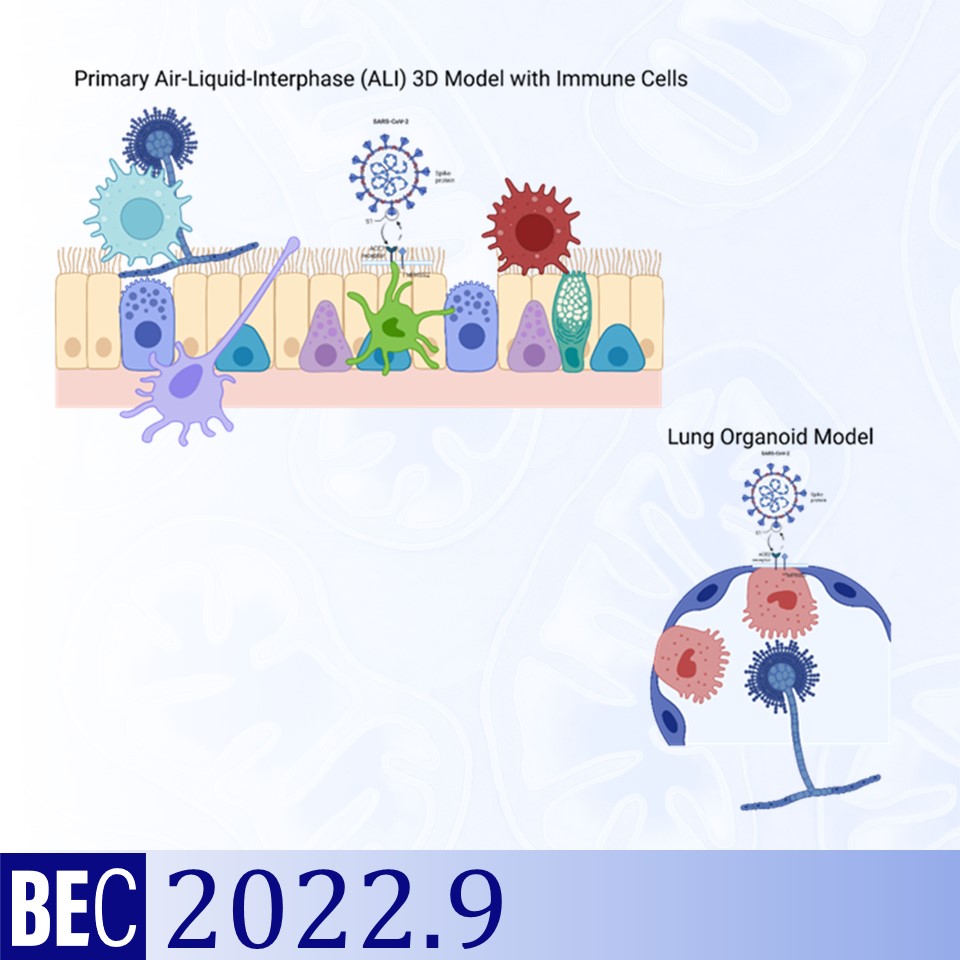
Sophisticated 3D cell culture tissue models experienced a boom in the last years and in particular human cell culture and 3D respiratory systems greatly supported the development of novel drugs and vaccines during the SARS-CoV-2 pandemic. These models provide multiple benefits in terms of similarities in differentiation, metabolism, receptor expression, polarity, and infectivity compared to human tissues and thus provide excellent models to study the first interactions with the host during pathogen entry. Depending on the experimental approach, the use of 3D models is beneficial – apical-out lung organoids for high content screening (HCS) of treatment options and air-liquid interphase (ALI) models for easy incorporation of immune cells, screening of epithelial integrity or mucociliary clearance. This review gives an overview on the models established in our laboratory and their applications.
Cite:
Posch W, Dichtl S, Zaderer V, Lass-Flörl C, Wilflingseder D (2022) How to optimize respiratory models for SARS-CoV-2 research. Bioenerg Commun 2022.9. https://doi.org/10.26124/bec:2022-0009
File Tambahan
Diterbitkan
Lisensi
Hak Cipta (c) 2022 Wilfried Posch, Stefanie Dichtl, Viktoria Zaderer, Cornelia Lass-Flörl, Doris Wilflingseder

Artikel ini berlisensi Creative Commons Attribution-NonCommercial-NoDerivatives 4.0 International License.